

The Macedonian Tomb of Spilia
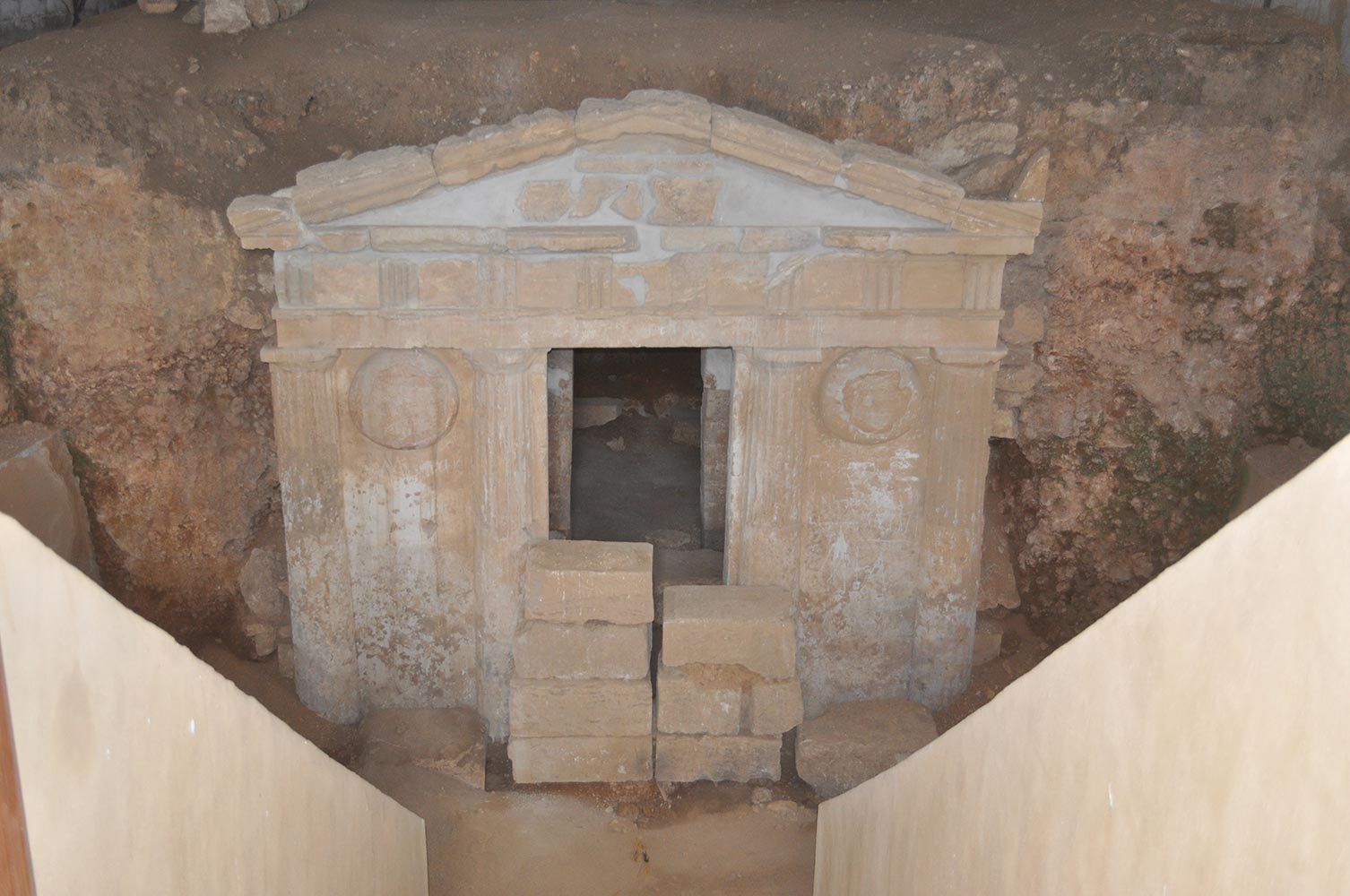
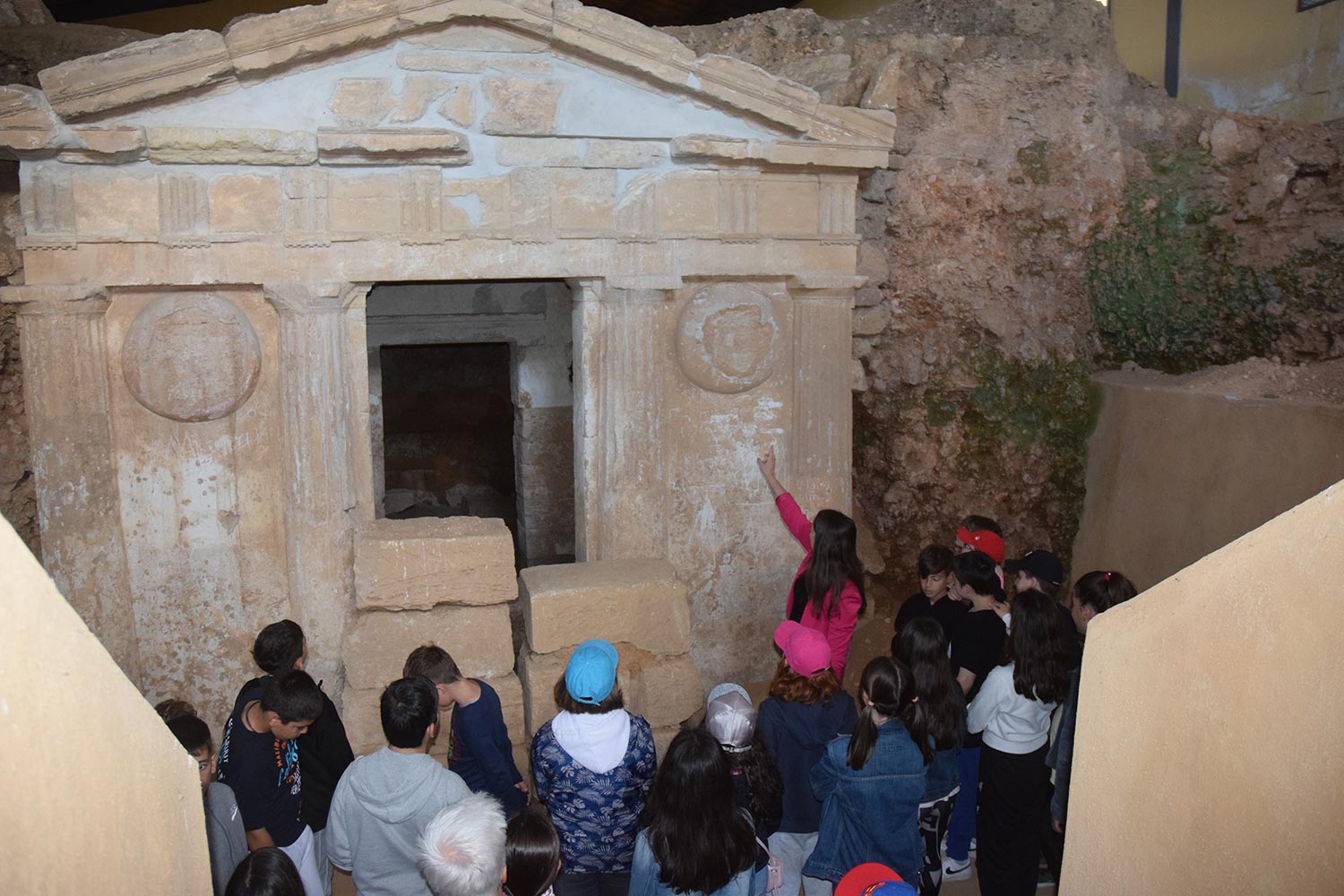
One of the absolute must-see sites during your visit to Eordaia is the Macedonian Tomb of Spilia. It is among the most significant ancient monuments in the region, offering direct insight into Macedonian history. While it was originally dated to the 2nd–1st century BC, typological comparisons with similar monuments suggest it most likely dates to the late 4th century BC, when Macedonia was at the height of its power. Although the tomb was looted, its archaeological and historical value remains immense. During your visit, you will be immediately impressed by its monumental Doric facade, its imposing pediment with four Doric half-columns, and the relief shields adorned with painted decoration of vegetal pattern — elements that grace the monument with a distinctive character and absolute grandeur. According to anthropological studies, seven or eight individuals were buried inside, using different burial practices (inhumation and cremation). The deceased were accompanied by grave goods; personal items, figurines, coins, and vessels. These findings, together with those from the Macedonian tomb at Pyrgoi of Eordaia, confirm the unity of Macedonian funerary customs and practices between Lower and Upper Macedonia.