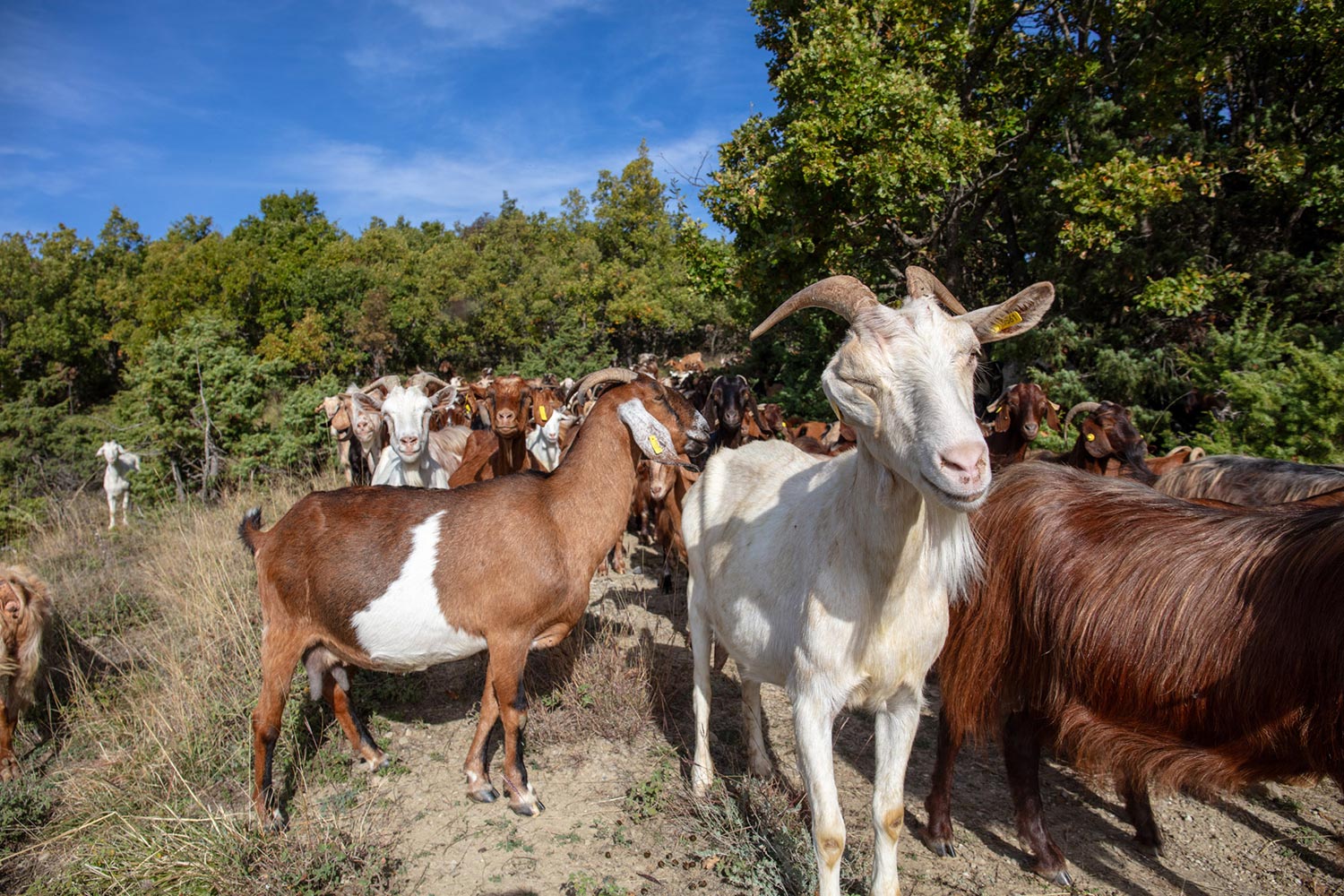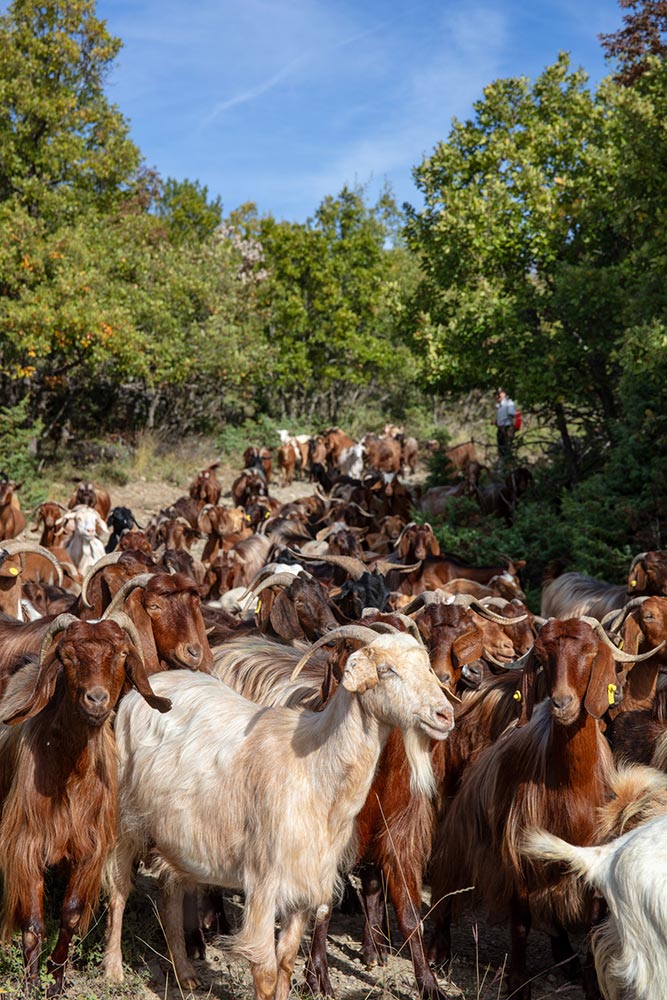


Transhumance, the seasonal droving of livestock
Deeply rooted in history, transhumance refers to the traditional practice of herders moving their flocks between summer and winter pastures according to the season. These routes, followed for centuries mainly by shepherds with sheep and goats, embody a rich cultural experience: practical knowledge of nature, wise resource management, animal care and, ultimately, the production of high-quality dairy and cheese products. Although traditional pastoral communities have diminished today, summer in Grevena still comes alive with their festivals and celebrations — dedicated to Saint Paraskevi, Prophet Elijah and the Virgin Mary — which continue to keep this tradition alive. Nowadays, of course, these seasonal movements are no longer carried out only on foot; technology and modern ways of life have introduced faster, motorised means of transport. Transhumance has been officially recognised as an element of the National Inventory of Intangible Cultural Heritage since 2017, while in 2019 it was also inscribed on UNESCO’s Representative List of the Intangible Cultural Heritage of Humanity under the title “Transhumance, the seasonal droving of livestock along migratory routes in the Mediterranean and the Alps”, together with Austria, Italy and seven other countries that joined later.