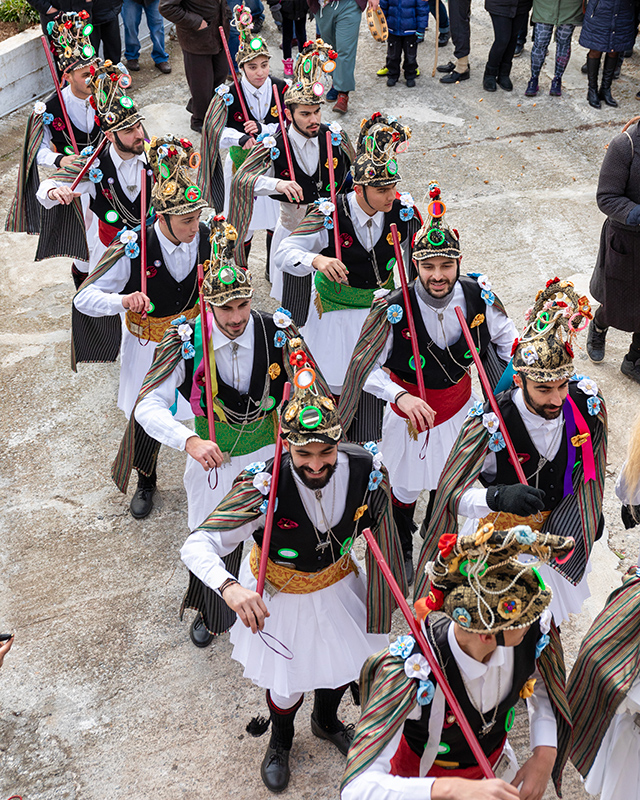


Momogeroi/Momoeria
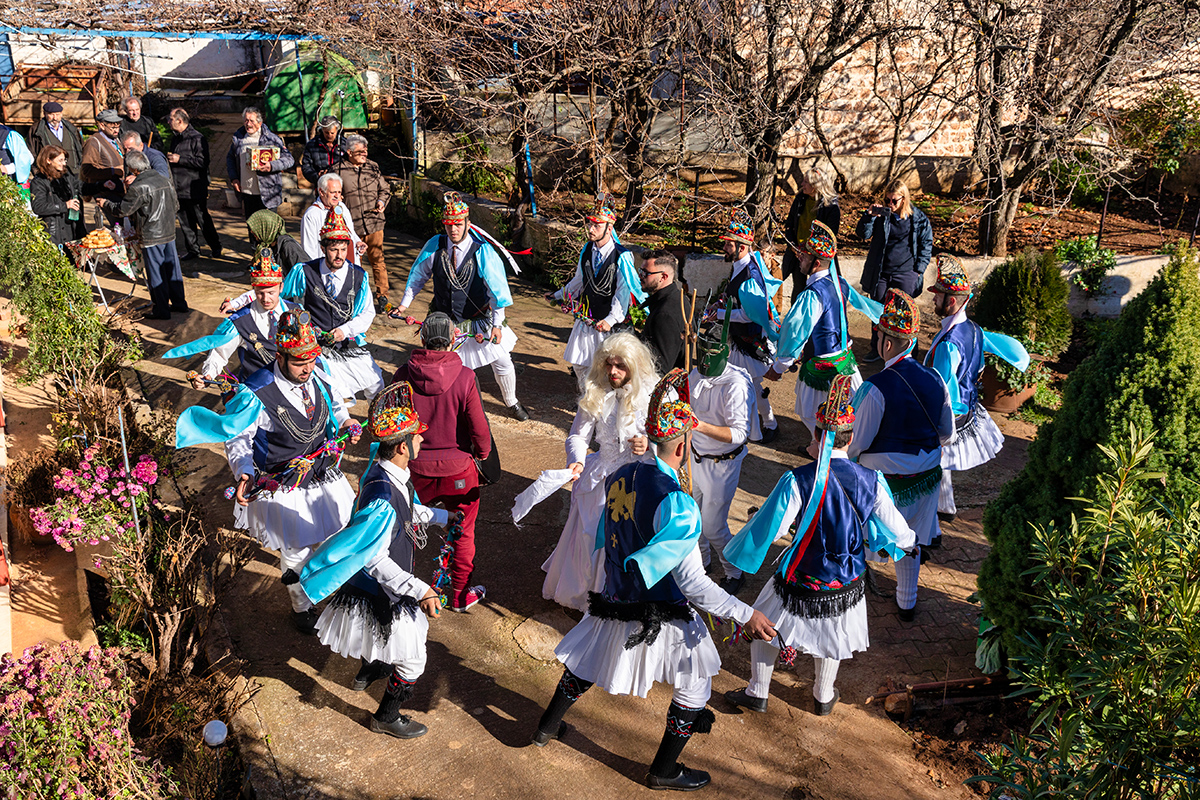
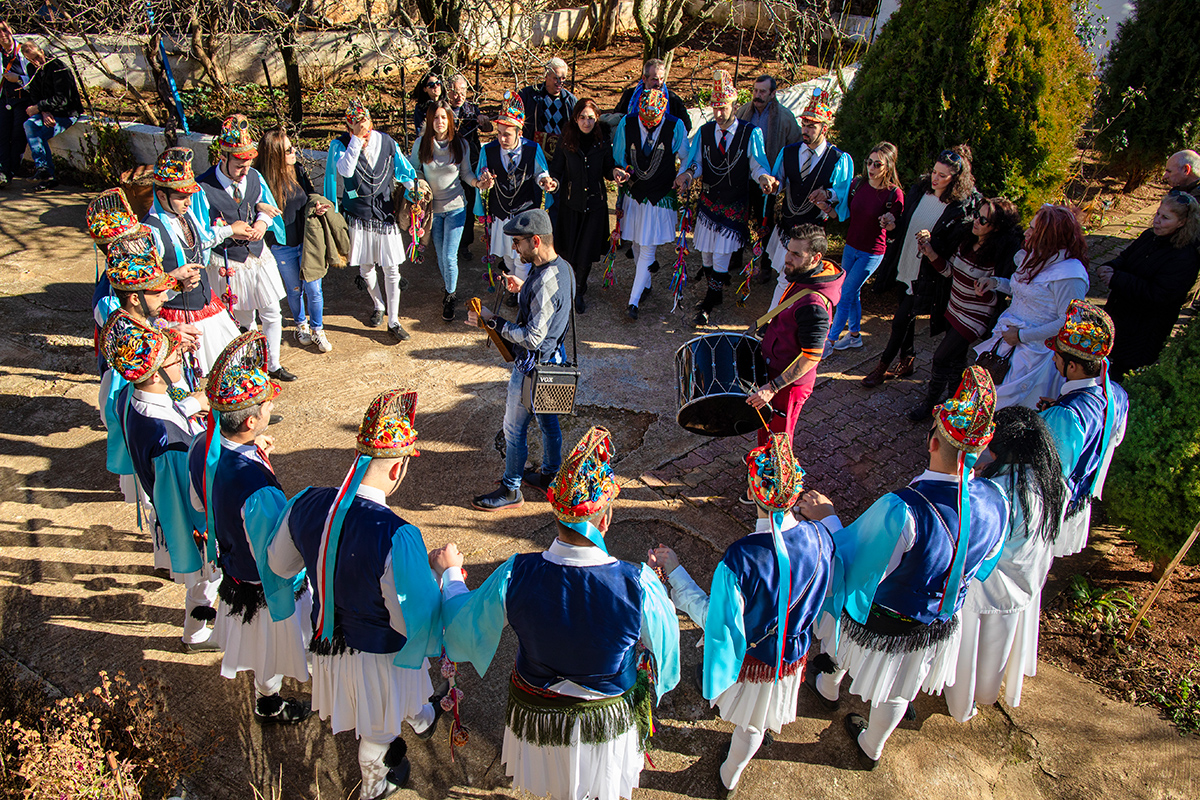
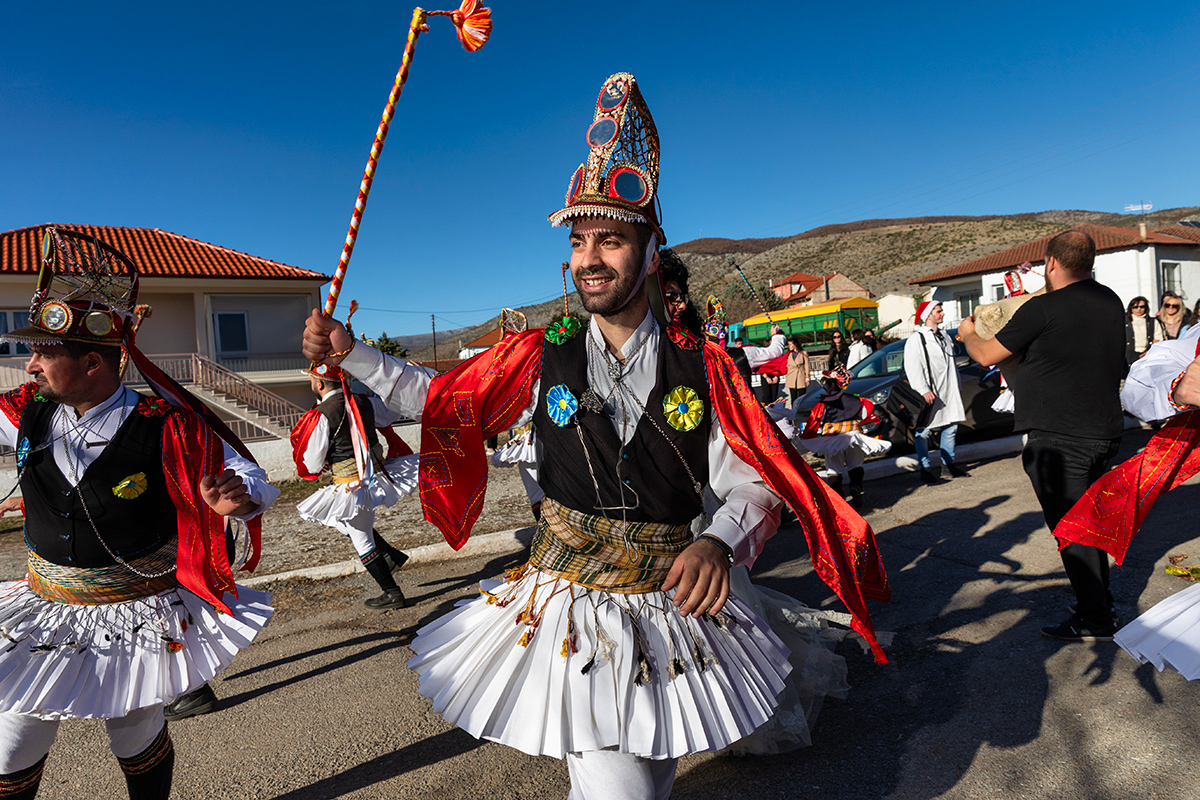
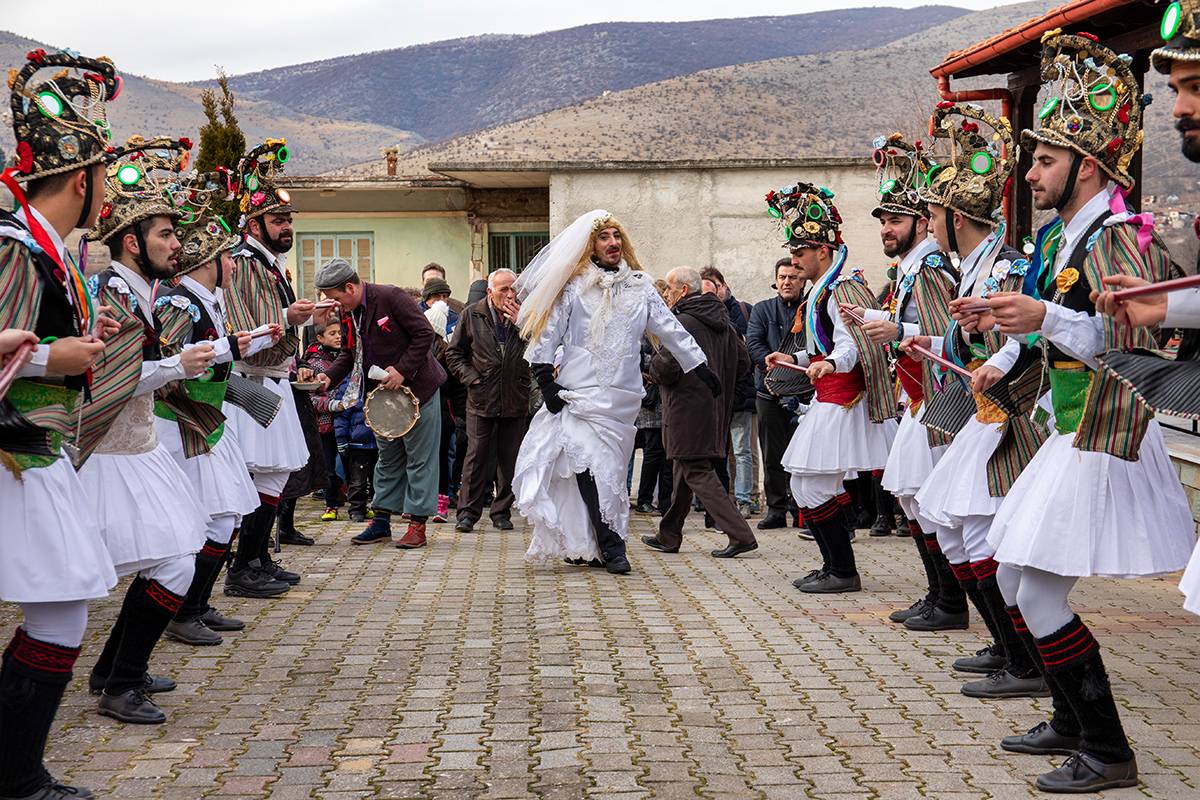
The Momoeria, or Kotzamania as they are called in Tetralofos, will transport you to older times through folk theater, music, and laughter. They take place every year during the Twelve Days of Christmas, lasting from Christmas to Epiphany, in villages of Kozani where Pontic refugees settled. This is a form of folk street theater that combines dance, music, and makeshift stages. The name of the custom is associated with the ancient god Momus, protector of satire and laughter — indeed, participation guarantees a lot of laughter. The group, consisting exclusively of men, includes musicians playing traditional Pontic instruments, dancers in impressive costumes, and members of the theatrical troupe who take on roles such as the “bride”, the “old man”, the “doctor”, the “devil”, and the “gendarmes” (policeman), creating a peculiar ensemble full of humor, satire, and liveliness. The Momogeroi go from house to house, dancing, singing, satirizing people and situations, and interacting with spectators who try to “kidnap” the bride. Their costumes are one of a kind: a distinctive helmet decorated with small mirrors and beads, a fustanella, a belt, and a wooden staff filled with bells that keeps rhythm with every step. They are accompanied by the Pontic lyra, the bagpipe (angion), and the daouli drum. Their festive melodies create a Dionysian atmosphere throughout the village. The Momoeria are recorded in the National Inventory of Intangible Cultural Heritage of Greece and in UNESCO’s Representative List of the Intangible Cultural Heritage of Humanity. Since 1924 until today, the custom has been passed down from generation to generation and is revived in Agios Dimitrios, Tetralofos, Skiti, Alonakia, and Protochori.